01The complete product
Engineered from within.
Every great product begins with the details you don't see.
CBS Flivver · Battery Engineering
Discover the engineering behind the energy.
Scroll to take a CBS lithium-ion battery apart, layer by layer.
01The complete product
Every great product begins with the details you don't see.
02The first reveal
An inside look at the components that make the system work.
03Electronics
Explore the system responsible for monitoring and managing the battery.
04The energy core
A closer look at the cells and connections inside the pack.
05Exploded view
The full assembly, separated just enough to see how it fits together.
Explore the components06Reassembly
Discover the complete CBS Flivver battery range.
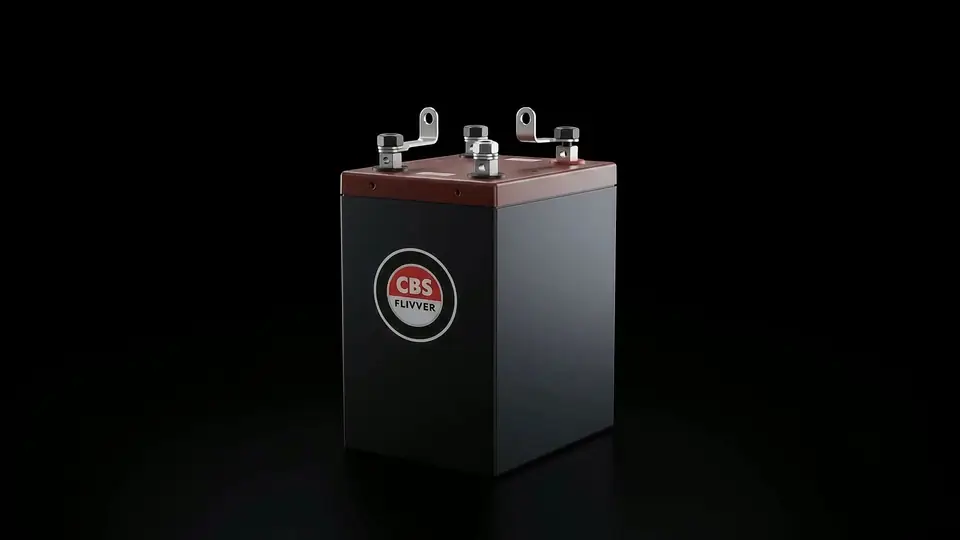
An animated 3D render shows the CBS Flivver lithium-ion battery opening into its internal components and closing again as you scroll.
Battery explorer
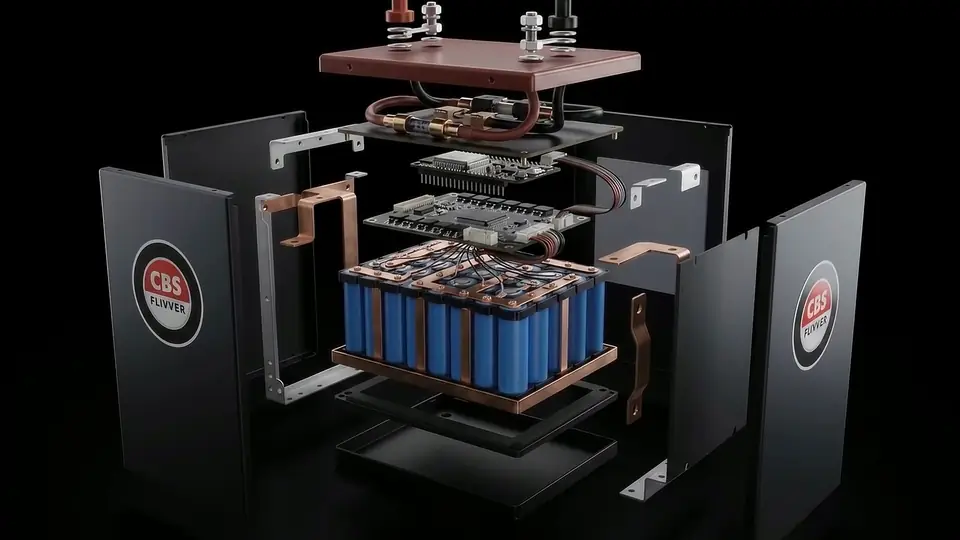
Turn the exploded battery, then select a part to bring it into focus and see what it does.
Six assemblies
Enter exploration mode to turn the battery and focus on each assembly.
How it works
Four assemblies turn individual lithium-ion cells into a battery that can power a vehicle.
Lithium-ion cells store the energy. Cells connected in series set the pack voltage (48, 60 or 72 V); cells in parallel add capacity.
Copper conductors join the cell groups and carry the pack current to the terminals.
The BMS electronics sit above the cells, wired to them, so the pack is supervised while it charges and discharges.
Positive and negative terminals connect the pack to the vehicle or charger; the matte-black enclosure and frame hold and protect the assembly.
The animation and exploded view are a visual reference based on the CBS Flivver battery render. Cell format, cell count and BMS specification vary by pack; ask us for the details of a specific configuration.
The range
Enquiries
Tell us what you need and we’ll get back to you. Mon–Sat, 8:00 am – 8:00 pm.